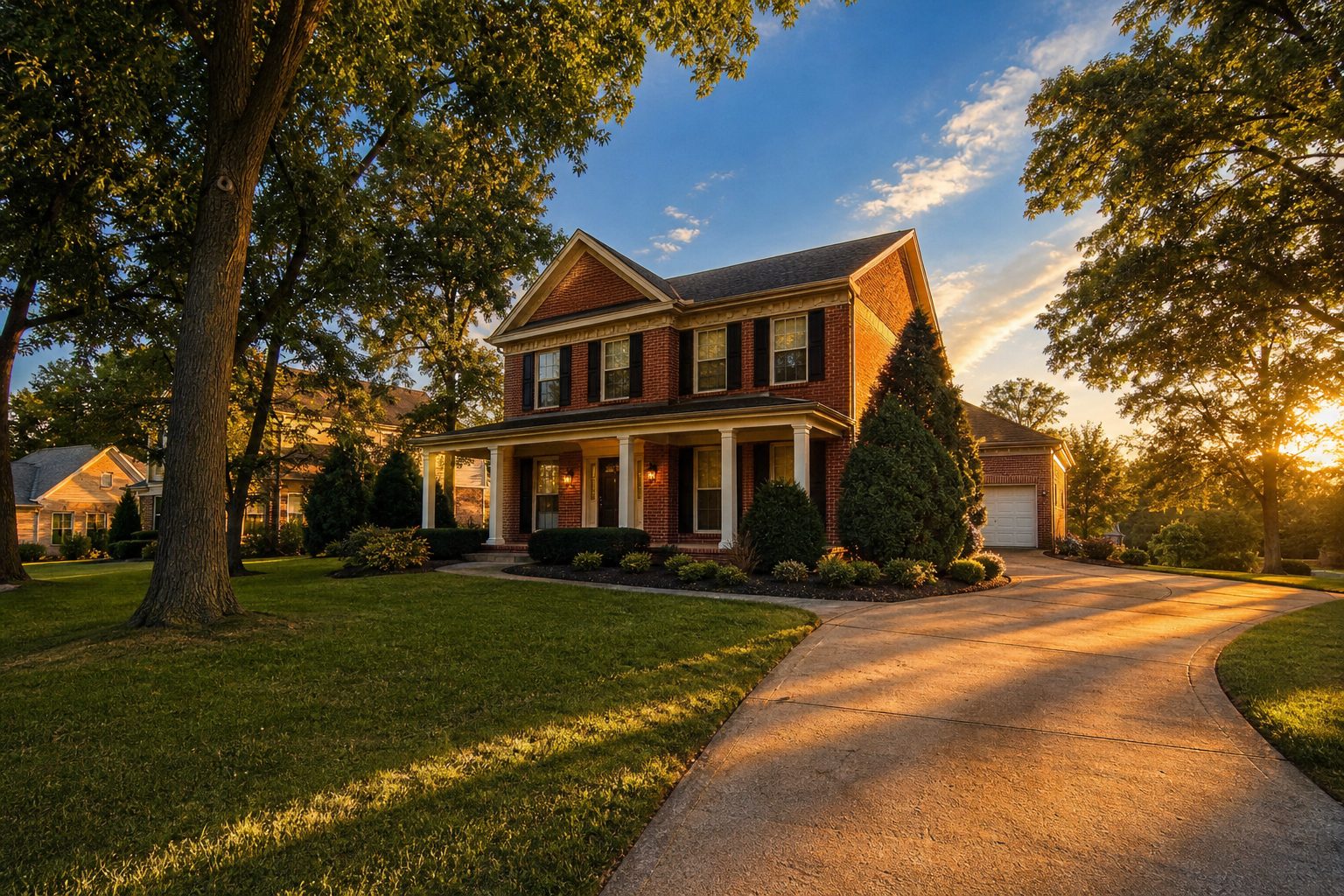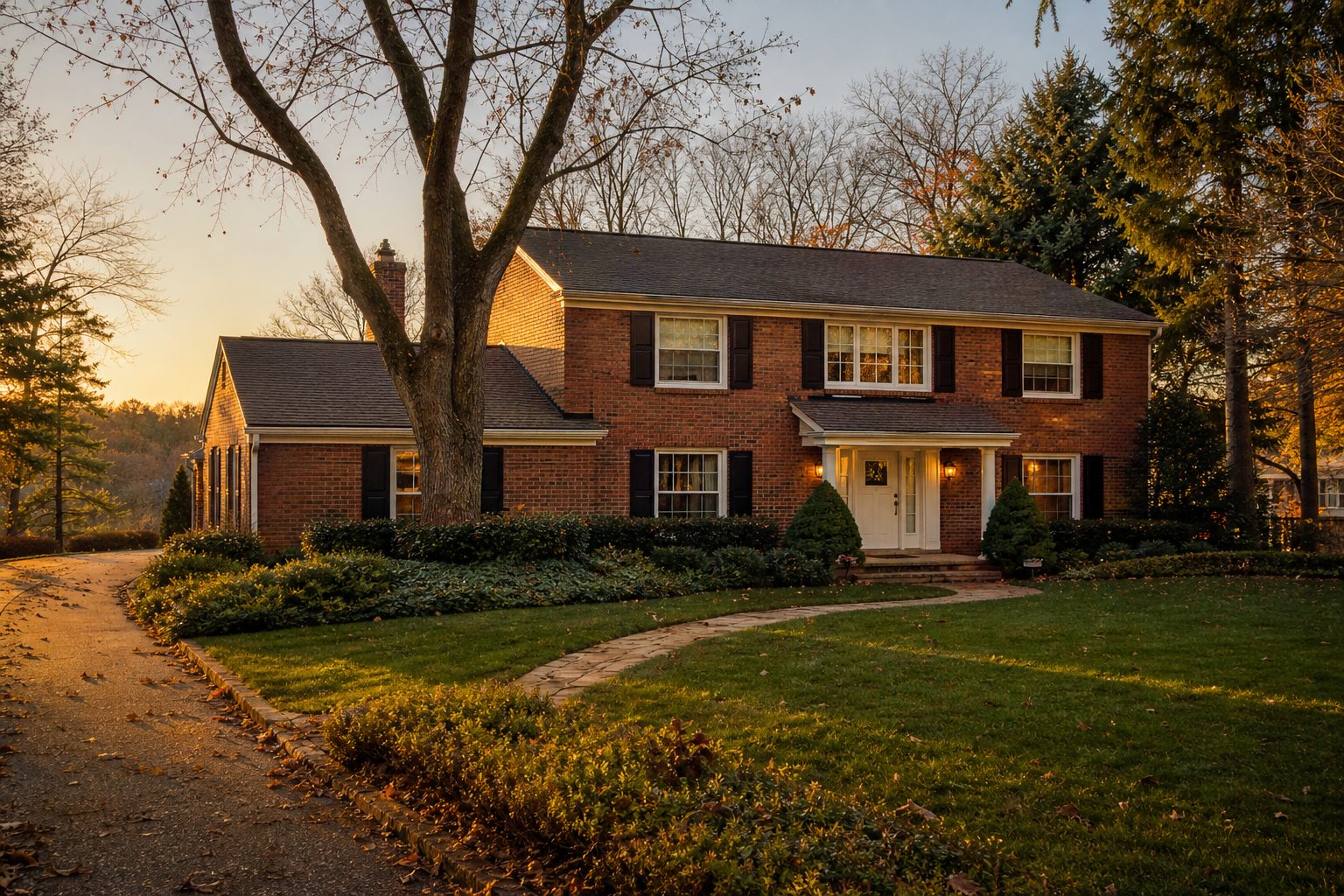
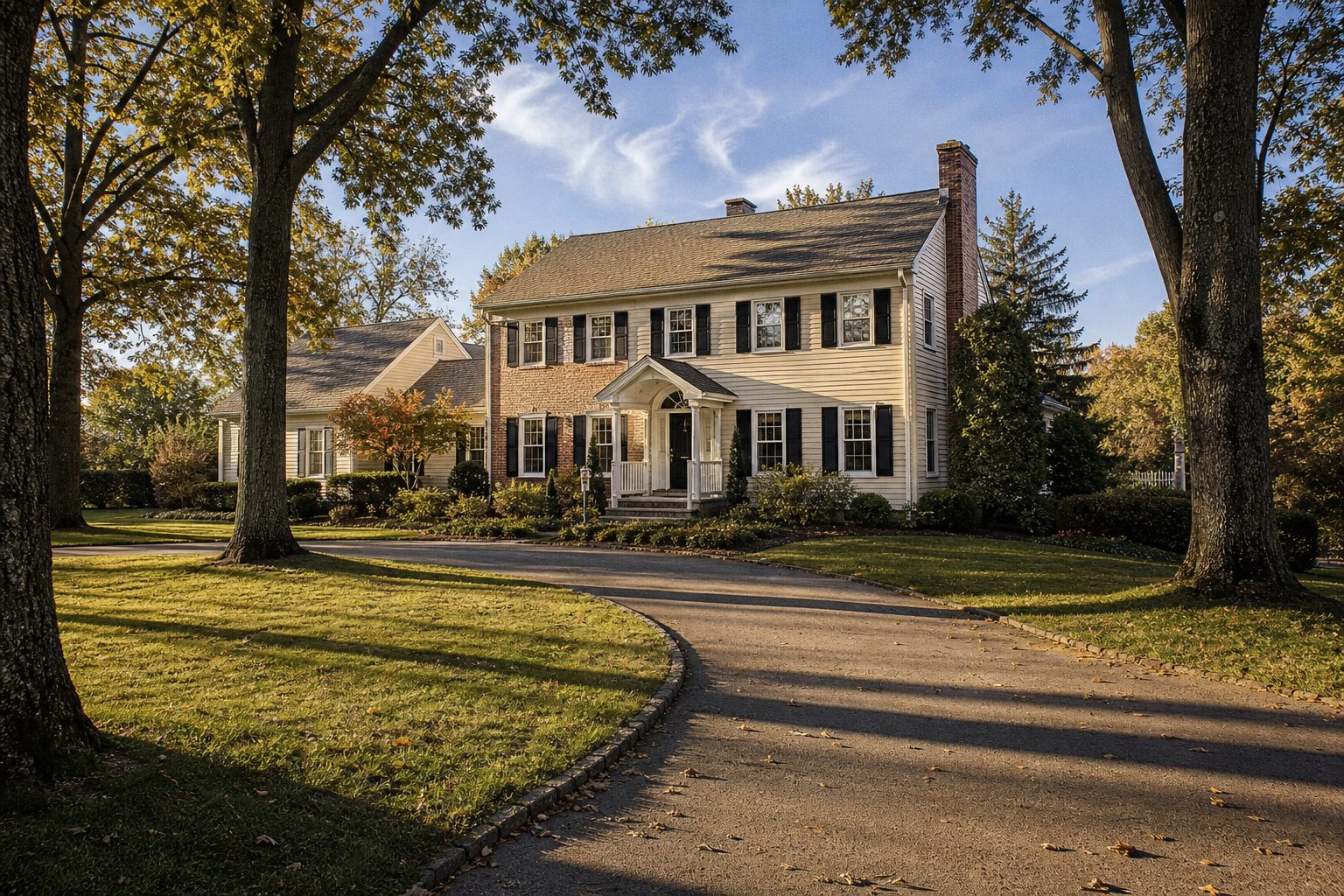
If you locked in a 3% mortgage rate during 2020 to 2022, is it worth giving up that rate to sell your Hampton or Richland home and move into one that actually fits your life?
For many homeowners in Hampton Township and Richland Township, the equity you have built over the past five years changes the math more than the rate itself. Your rate matters, but so does your life, and running the numbers both ways often reveals that staying put costs more than you think.
Why This Matters Right Now in Pittsburgh’s North Hills
I talk to homeowners in Allison Park and Gibsonia every week who are living in this exact tension. They locked in a phenomenal rate, the house was perfect at the time, and now they need a fourth bedroom, a home office, or simply more space for a growing family. The 3% rate feels like a golden ticket they cannot afford to give up.
Here is the reality of the 2026 Pittsburgh housing market: the average 30-year fixed mortgage rate is approximately 7.11% as of November 2026, according to Freddie Mac. That is more than double what many of you locked in. The gap is real. But the equity picture in Hampton and Richland has shifted dramatically in your favor. Hampton Township’s median close price hit $450,000 in Q1 2026 per broker market reports, with average close prices reaching $513,000. If you bought five years ago at around $320,000, you could be sitting on $130,000 or more in equity. That is not a small number, and it fundamentally changes the conversation.
The Real Cost of Staying in a Home That No Longer Fits in Hampton Township
Most homeowners fixate on the rate they would lose. What I encourage you to think about first is the cost of staying. And I do not just mean dollars.
You might be converting a dining room into a makeshift office, squeezing a crib into a bedroom that already has a toddler in it, or parking in the driveway because the garage became a storage unit. These are real quality-of-life costs, and they compound over time.
There are also financial costs to staying. Renovation and additions in Hampton Township are not cheap, and they come with permit timelines, contractor delays, and the reality that adding a room to a colonial on Ferguson Road does not always return dollar-for-dollar at resale. In many cases, the cost of a major renovation before listing approaches or exceeds the cost difference you would absorb from a higher mortgage rate on a new home.
Having closed over 850 transactions across the Pittsburgh area during my 12 years in real estate, I can tell you that the families who agonize the longest over their rate are often the ones who feel the most relief once they finally make the move. The house that fits your life is worth more than a line item on your mortgage statement.
How the Equity Math Works in Your Favor in Hampton and Richland
Here is where I encourage you to look at the numbers differently. Your rate matters. So does your life. I run the numbers both ways for every client: the cost of the new payment versus the cost of staying in a house that no longer fits. Sometimes staying wins. But often, the equity you have built changes the math more than the rate does.
Let me walk through what this looks like in Hampton and Richland specifically.
Hampton Township Equity Example
Hampton Township’s median home value sits 46% above the Pittsburgh metro average, according to 2026 market index data. Homes in the $370,000 to $450,000 range are appreciating at roughly 4.5% annually, with a 98% sale-to-list ratio and an average of 38 days on market. That means your home is not just worth more; it is selling quickly and close to asking price.
If you purchased a Hampton home five years ago at $320,000, your home could now be worth $450,000 or more. After paying off a remaining mortgage balance of, say, $220,000, you are walking away with $230,000 in equity. Put $150,000 of that toward a $550,000 move-up home, and your new loan is $400,000, not $550,000. That equity cushion absorbs a significant portion of the rate increase.
Richland Township Equity Example
In Richland Township, typical home prices sit at approximately $477,816, with an area median income of $110,400 and 82% owner-occupancy, per 2026 housing data. The higher income base in Gibsonia means more households can absorb an adjusted payment, and the strong owner-occupancy rate signals a community where people invest for the long term.
Five Strategies to Offset a Higher Rate When Buying in Pittsburgh
You are not powerless against today’s rates. Here are the strategies I walk through with move-up buyers in the North Hills every day.
- Maximize your down payment. The more equity you put down, the smaller the loan, and the less that higher rate actually costs you each month. Pittsburgh’s affordability, with a cost of living index of 93.2 (below the national average), means your dollar stretches further here than in most major metros.
- Consider a 15-year mortgage. The 15-year fixed rate is currently 6.61%, according to Mortgage Research Center data as of November 2026. That is meaningfully lower than the 30-year rate, and it builds equity at an accelerated pace. For households with strong income, this can be a powerful play.
- Explore adjustable-rate products. The 5-year ARM sits at approximately 7.05% with a 6.91% APR as of November 2026. If you plan to refinance when rates eventually decline, an ARM gives you a lower starting payment.
- Negotiate a rate buydown. Temporary buydowns (2-1 or 3-2-1 structures) can reduce your effective rate in the first few years, easing the transition. In a market where Hampton homes carry a 98% sale-to-list ratio, you have negotiating power as a seller that can fund this buydown on your next purchase.
- Date the rate, marry the house. This is the most common advice I give, and it is grounded in reality. You can refinance a rate. You cannot refinance a school district, a neighborhood, or the years your kids spend growing up in a home that actually fits.
What Pittsburgh’s Affordability Means for Your Move-Up Decision
Here is a fact that gets lost in the rate conversation: Pittsburgh is one of the most affordable major metro markets in the country. The metro-wide median home price of approximately $260,000 to $310,000 sits well below the national median of approximately $420,000, according to West Penn MLS aggregate data as of April 2026.
What does that actually mean for you? It means the absolute dollar impact of a higher rate is smaller here than almost anywhere else. At a $247,000 median price with a 6.8% rate and 10% down, your principal-and-interest payment is approximately $1,456 per month. Compare that to $3,200 or more per month for the same rate on a median-priced home in Philadelphia, or over $5,000 in Northern Virginia.
If you are selling in Hampton Township, where the largest share of Q1 2026 sales fell in the $250,000 to $500,000 range at 45.9% per broker market reports, and buying within the same North Hills corridor, you are operating in a price tier where the rate difference, while real, is manageable for most households.
With 120 five-star reviews from past clients and a track record as a Top 1% real estate agent, I have seen this math play out in real estate pricing decisions hundreds of times. Pittsburgh’s affordability is your secret weapon in this decision.
Should You Wait for Rates to Drop Before Selling in Richland Township?
This is the question I hear most often from homeowners along Gibsonia Road and throughout the Richland Township subdivisions. “Should I just wait?”
Here is my honest answer: maybe. But waiting carries its own costs.
The base case forecast for Q4 2026 is a 30-year fixed rate averaging around 7.350%, according to housing authority projections, with modest downside only if inflation prints come in softer than expected. Rates could ease over the next one to two years, but no credible forecast is calling for a return to 3%.
Meanwhile, home prices in the Pittsburgh property market are expected to rise modestly by 2 to 4%, per market outlook data for 2026. That means the home you want to buy is getting more expensive while you wait. And with inventory still below fully balanced levels (active listings in the Pittsburgh CBSA stood at 4,999 as of May 2026, per FRED data), the selection advantage of acting now should not be overlooked.
If your life needs have changed, and you are within 15 to 20 minutes of the McKnight Road employment corridor and UPMC Passavant, as Hampton and Richland residents are, the North Hills market is not going to get dramatically easier to buy into by waiting.
Frequently Asked Questions
How much more will I actually pay per month if I give up my 3% rate in Hampton Township?
It depends on your equity and new loan amount. A homeowner going from a $150,000 remaining balance at 3% to a $300,000 loan at approximately 7.11% would see a principal-and-interest increase of roughly $1,400 per month. However, applying $100,000 or more in built-up equity as a larger down payment significantly reduces that gap.
Is it better to renovate my current home in Richland Township than to sell?
In some cases, yes. But major renovations in Gibsonia and the surrounding Richland subdivisions often run $80,000 to $150,000 or more and do not always return full value at resale. I always recommend running the numbers side by side before committing to either path.
What is the current mortgage rate as of November 2026?
The average 30-year fixed rate declined to 7.11% on November 12, 2026, according to Freddie Mac. The 15-year fixed rate is approximately 6.61%, and the 5-year ARM sits at about 7.05%, per Mortgage Research Center data.
How much equity have Hampton Township homeowners built recently?
Hampton Township has seen approximately 4.5% annual appreciation, per the 2026 Pittsburgh Real Estate Market Index. A homeowner who purchased five years ago at $320,000 could be sitting on $130,000 or more in equity based on current median close prices of $450,000.
Can I rent out my current home instead of selling it?
Potentially. If your current home is in a desirable location along the Route 8 corridor or near North Park, rental demand can be strong. However, managing a rental property adds complexity, and lender requirements for your new purchase may be affected. This is worth a detailed conversation.
What school districts should I consider if I am upsizing in the North Hills?
Hampton Township School District holds an A+ overall grade from Niche and is ranked number 8 among the best school districts in the Pittsburgh area and number 22 in all of Pennsylvania. It is one of the top reasons families move to this area.
How fast are homes selling in Hampton Township in 2026?
Homes in Hampton Township are averaging 38 days on market with a 98% sale-to-list ratio, according to the 2026 Pittsburgh Real Estate Market Index. This is a consistently competitive seller’s market, which works in your favor if you are listing.
Will mortgage rates come back down to 3%?
No credible forecast is calling for a return to 3% rates. The Q4 2026 quarterly-average forecast projects rates holding around 7.350%. Modest declines are possible if inflation softens, but waiting for 3% rates is not a realistic strategy.
How does Pittsburgh’s cost of living help offset a higher rate?
Pittsburgh’s cost of living index is 93.2, which is below the national average of 100. This means more of your household budget is available to absorb a higher mortgage payment compared to homeowners in higher-cost metros facing the same rate environment.
What is the best strategy if I want to buy now and refinance later?
Consider an adjustable-rate mortgage with a 5-year initial period (currently around 7.05% with a 6.91% APR as of November 2026) or a temporary rate buydown. Both reduce your initial payment while keeping the door open for refinancing when rates eventually ease.
The Bottom Line
Your 3% rate is valuable. I will never tell you otherwise. But it is not the only number that matters. The equity you have built in Hampton Township or Richland Township over the past several years may be worth more to your next chapter than holding onto a rate on a home that no longer serves your family.
I run the numbers both ways, every time. Sometimes staying wins. But if your life has outgrown your home, and you are sitting on $100,000 or more in equity in one of Pittsburgh’s strongest North Hills communities, the math in real estate decisions is often closer than you expect.
If you want to see exactly what your home is worth and what a move-up purchase looks like with real numbers, give me a call at 412-214-9494. I am Mike Pastor with The Mike Pastor Group at Realty One Group Landmark (brokerage phone: 724-468-8841), and I would be glad to build a data-backed plan that puts you in control of this decision.