
Overview & Orientation
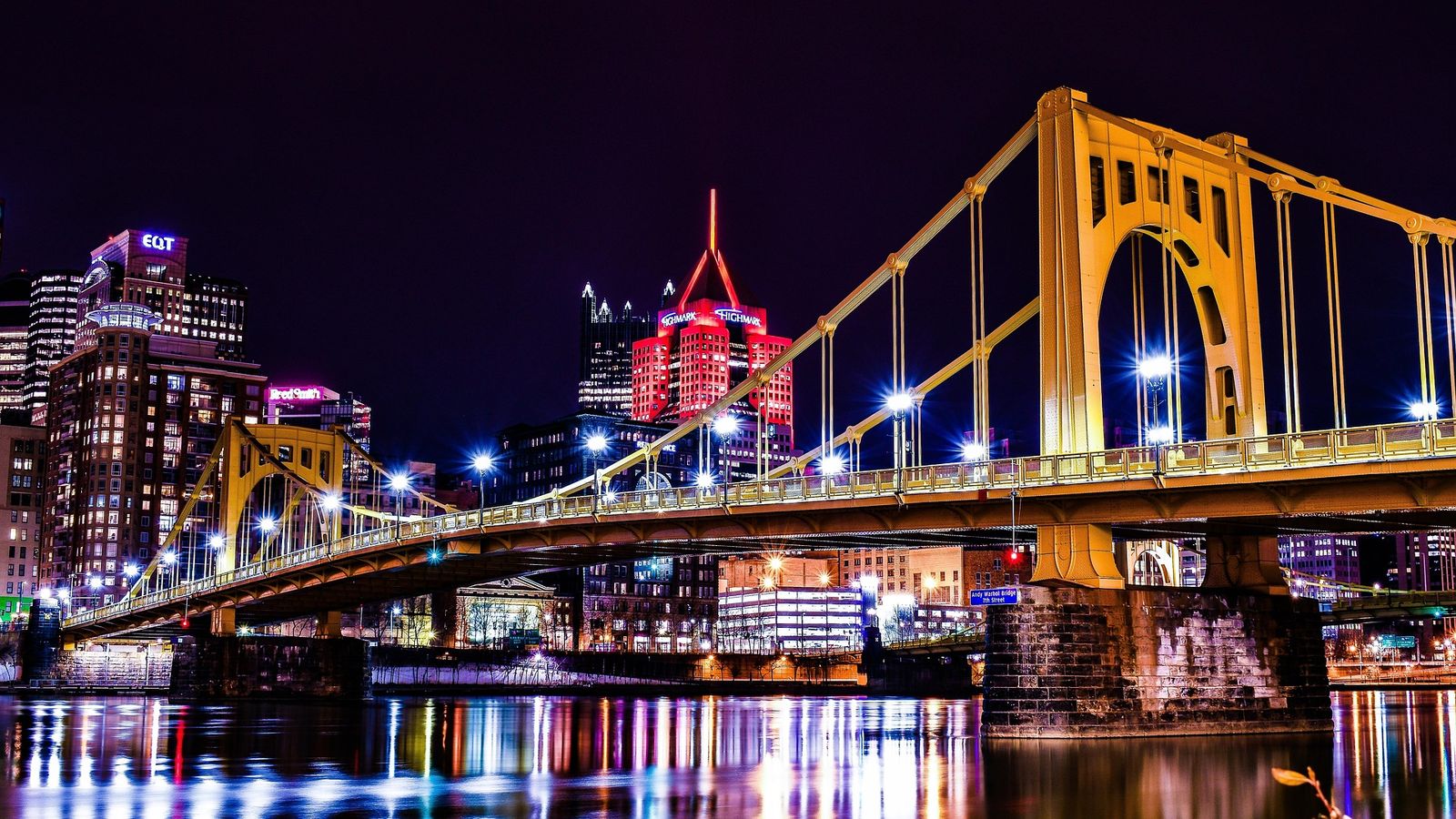
Pittsburgh is the county seat of Allegheny County and the center of Western Pennsylvania, built where the Allegheny and Monongahela Rivers meet to form the Ohio. The city covers about 58 square miles and is divided into 90 neighborhoods, from Downtown’s Golden Triangle to the North Side, South Side, East End, and West End. Known as the “City of Bridges” for its 446 bridges, Pittsburgh is also home to hundreds of sets of public city steps, major universities and hospitals, four large regional parks, two working inclines, and its own public school district.
Where Pittsburgh Is
- County: Allegheny County (county seat)
- Type: City. Pittsburgh became a borough in 1794 and a city in 1816. It covers about 58 square miles, including roughly 3 square miles of rivers. See Wikipedia’s Pittsburgh entry.
- Neighborhoods: 90 official neighborhoods, grouped around Downtown and the North Side, South Side, East End, and West End
- ZIP codes: Many, generally in the 152xx range. Several are shared with suburbs outside the city.
City of Pittsburgh or a “Pittsburgh” Address?
This is one of the most important things to know when buying in the area. Thousands of homes in suburban townships and boroughs have a “Pittsburgh, PA” mailing address but are not in the City of Pittsburgh. Those homes have different taxes, services, and school districts:
| Location | School District |
|---|---|
| City of Pittsburgh (all 90 neighborhoods) | Pittsburgh Public Schools |
| Ross Township (“Pittsburgh” 15237/15229) | North Hills |
| Mt. Lebanon (“Pittsburgh” 15228) | Mt. Lebanon |
| Penn Hills (“Pittsburgh” 15235) | Penn Hills |
| Many other boroughs and townships | Their own districts |
To confirm whether a property is in the city, check the deed, the tax bill, or the Allegheny County real estate records, where the municipality is listed.
Typical Drive Times from Downtown
Times are approximate. Traffic varies by time of day, especially on the Parkways and at the tunnels.
| Destination | About |
|---|---|
| Oakland (universities and hospitals) | 10–15 minutes |
| Shadyside / Squirrel Hill | 15–20 minutes |
| Lawrenceville / Strip District | 5–10 minutes |
| Pittsburgh International Airport | 20–30 minutes |
| Cranberry Township | 30–35 minutes |
A Brief History
In 1758, British forces began building Fort Pitt at the meeting of the three rivers, and the settlement that grew around it took the name Pittsburgh. It became a borough in 1794 and a city in 1816. Over the next century, coal, iron, glass, and above all steel turned Pittsburgh into one of the country’s major industrial centers, and the city expanded by adding many neighboring boroughs, including Allegheny City, today’s North Side.
After the steel industry’s decline in the late 1900s, Pittsburgh’s economy shifted toward healthcare, higher education, and technology. Today UPMC is the region’s largest employer, and the city is home to dozens of colleges and universities, including the University of Pittsburgh, Carnegie Mellon, and Duquesne.
Notable Landmarks
- Point State Park: At the tip of Downtown where the three rivers meet, with its signature fountain
- Mount Washington and the inclines: The Duquesne and Monongahela Inclines climb to overlooks above Downtown
- Cathedral of Learning: The University of Pittsburgh’s landmark tower in Oakland
- The North Shore: Home to the city’s football and baseball stadiums and riverfront trails
- The Strip District: A historic market district along the Allegheny
Housing & Real Estate
Housing Stock
With 90 neighborhoods, Pittsburgh has nearly every kind of housing. Many neighborhoods are filled with homes built from the late 1800s through the 1930s, including brick rowhouses, frame and brick worker houses on steep hillsides, American foursquares, and large Victorian and Tudor homes on wide streets. Mid-century homes are common in neighborhoods farther from Downtown, and condominiums, lofts, and apartments are concentrated Downtown, on the North Shore, and in East End and riverfront neighborhoods.
Older city homes may call for a closer look at roofs, masonry, sewer laterals, retaining walls, and water service lines during inspections. Properties near the rivers and creeks should be checked on the FEMA Flood Map Service Center.
Realty Transfer Tax
Homes in the City of Pittsburgh carry a higher realty transfer tax than most suburbs: a total of 5% of the sale price, made up of 1% state, 3% city, and 1% school district, according to HomeLight’s Pittsburgh transfer tax guide. In Pennsylvania, buyer and seller commonly split the tax, but it is negotiable. See Allegheny County’s realty transfer tax page for current rates by municipality.
Types of Homes
- Single-family homes, from small hillside houses to large older homes
- Rowhouses and townhomes
- Duplexes and multi-unit homes
- Condominiums, lofts, and apartments
Prices and availability change daily, so the live feed is the place to check. See current homes for sale in Pittsburgh, or browse by neighborhood using the links at the bottom of this page.
Schools
Pittsburgh Public Schools
The City of Pittsburgh is served by Pittsburgh Public Schools, which runs about 50 schools, including K–5, K–8, middle, 6–12, and high schools, plus several specialized schools with citywide admission. Neighborhood school assignments follow feeder patterns, which you can explore in the district’s feeder pattern and attendance boundary data.
Colleges & Universities
- University of Pittsburgh and Carnegie Mellon University (Oakland)
- Duquesne University (Bluff) and Point Park University (Downtown)
- Chatham University and Carlow University, plus CCAC’s Allegheny Campus on the North Side
For school performance data, visit the Pennsylvania Department of Education’s Future Ready PA Index and the district’s own website. School assignments can change. Confirm directly with the district.
Getting Around
Major Roads
- I-376 (Parkway East and Parkway West): East to Monroeville and west through the Fort Pitt Tunnel to the airport
- I-279 (Parkway North): North to the North Hills and Cranberry, with HOV lanes
- PA Route 28: Northeast along the Allegheny River
- Liberty Tunnel and Route 51: South to the South Hills
Public Transit
Pittsburgh Regional Transit (PRT) runs buses throughout the city, dedicated busways to the East End and West End, the “T” light rail from Downtown and the North Shore to the South Hills, and the Monongahela Incline. Check the PRT trip planner for current routes and schedules.
Walkability & Bikeability
Walkability varies widely by neighborhood. Downtown and many East End and riverfront neighborhoods are very walkable, while hillside neighborhoods often rely on city steps or a car. Riverfront trails connect much of the city for walking and biking. See Walk Score for Pittsburgh.
Things to Do
Regional Parks
Pittsburgh’s large city parks are described in detail by VisitPITTSBURGH:
- Frick Park: The largest city park at 664 acres, with wooded trails, the Frick Environmental Center, the Blue Slide Playground, and a public lawn bowling green
- Schenley Park: 456 acres in Oakland, with Flagstaff Hill, a golf course, an ice rink, a pool, and trails
- Highland Park: Home to the Pittsburgh Zoo & Aquarium, a pool, and a bike track
- Riverview Park: 259 acres on the North Side, with the Allegheny Observatory and wooded trails
- Emerald View Park: 257 acres along Mount Washington, with overlooks and trails
Culture, Sports & Dining
The Cultural District Downtown has theaters and galleries, and the Carnegie Museums of Art and Natural History are in Oakland. The city’s professional football, baseball, and hockey teams play Downtown and on the North Shore. Neighborhood business districts such as Lawrenceville’s Butler Street, Squirrel Hill’s Forbes and Murray Avenues, Shadyside’s Walnut Street, and the Strip District each have their own shops and restaurants.
Libraries
The Carnegie Library of Pittsburgh, founded in 1890, runs its main library at 4400 Forbes Avenue in Oakland plus 19 neighborhood branches across the city.
Local Services & Resources
City Government & 311
City-County Building, 414 Grant Street, Pittsburgh, PA 15219
Website: pittsburghpa.gov
311 Response Center: pittsburghpa.gov/311 or (412) 255-2621, for city services, questions, and non-emergency requests
City Council: Nine members, each elected from a district, meeting in Council Chambers in the City-County Building. See the City Council page for schedules, livestreams, and public comment.
Trash & Recycling
The city’s Department of Public Works collects trash weekly, up to two bulk items per week, and recycling every other week. Yard waste is collected curbside twice a year. Set items out no earlier than 6 p.m. the day before and no later than 6 a.m. on collection day, in containers no larger than 35 gallons. Your collection day is available through 311. See the city’s waste and recycling fact sheet.
Emergency Services
- Emergencies: Call 911
- Police, Fire, and EMS: Pittsburgh Bureau of Police, Pittsburgh Bureau of Fire, and Pittsburgh EMS, all city departments
- Non-emergency city services: Call 311
Hospitals
Pittsburgh has several major hospitals, including UPMC Presbyterian and UPMC Shadyside in the East End, UPMC Mercy near Downtown, and AHN Allegheny General Hospital and AHN West Penn Hospital.
Permits & Zoning
Planning a renovation, addition, deck, fence, or pool? Building, zoning, and other city permits are handled online through OneStopPGH.
Frequently Asked Questions
Is every “Pittsburgh, PA” address in the City of Pittsburgh?
No. Many suburban boroughs and townships use a “Pittsburgh” mailing address. Check the deed, tax bill, or county records to confirm the municipality.
How many neighborhoods does Pittsburgh have?
Ninety official neighborhoods, grouped around Downtown and the North Side, South Side, East End, and West End.
What school district serves the City of Pittsburgh?
Pittsburgh Public Schools serves every city neighborhood. Assignments follow feeder patterns, so confirm the schools for a specific address with the district.
What is the realty transfer tax in Pittsburgh?
A total of 5% of the sale price for city properties: 1% state, 3% city, and 1% school district. Buyer and seller often split it.
How is trash collected in the city?
The Department of Public Works collects trash weekly and recycling every other week. Call 311 or check the city website for your day.
Why is Pittsburgh called the City of Bridges?
The city has 446 bridges crossing its rivers, valleys, and hillsides.
How do I get a building permit in Pittsburgh?
Apply online through OneStopPGH, the city’s permit and licensing portal.
How far is Pittsburgh International Airport from Downtown?
About 20 to 30 minutes by I-376 West through the Fort Pitt Tunnel, depending on traffic.
Thinking About a Move to Pittsburgh?
Whether you are buying in the City of Pittsburgh or selling a home here, we’re happy to answer questions, including whether a “Pittsburgh” address is actually in the city and how the transfer tax works. No pressure. Just local knowledge. Start with the current Pittsburgh listings, or reach out to our team.
Mike Pastor Group | Realty ONE Group Landmark
412-214-9494 | pittsburghhometeam.com
Explore Pittsburgh Neighborhoods
- Squirrel Hill (homes for sale)
- Shadyside (homes for sale)
- Lawrenceville (homes for sale)
- Bloomfield (homes for sale)
- Highland Park (homes for sale)
- Point Breeze (homes for sale)
- Greenfield (homes for sale)
- East Liberty (homes for sale)
- Brighton Heights (homes for sale)
Written by Mike Pastor, Team Leader, Mike Pastor Group | Realty ONE Group Landmark | PA License RS328638
120+ five-star client reviews.