If you’re upgrading to a home in Upper St. Clair and plan to sell or refinance within five to seven years, should you choose an adjustable-rate mortgage or lock in a 30-year fixed rate?
For move-up buyers with a defined timeline, a 7/1 ARM can save you roughly $108 per month on a typical Upper St. Clair purchase, but your personal risk tolerance, the rate caps, and your exit strategy matter more than the starting rate alone.
Why This Decision Matters Right Now in Pittsburgh
I’ve spent 12 years helping Pittsburgh families navigate exactly this kind of crossroads, and in 2026 it comes up in nearly every conversation with move-up buyers. Here’s the reality: mortgage rates are currently sitting around 6.23%, projected to hover between 6.0% and 6.8% for the year, according to mortgage rate forecasting data. That is a far cry from the 2.5% to 3.5% rates many of you locked in during the pandemic.
So you’re facing a math problem that stings. Moving from your $200,000 starter home with a 3% rate to a $478,000 home in Upper St. Clair at 6.4% more than triples the interest cost. That payment shock is real, and it’s the single biggest reason I see move-up buyers freeze in place. But the mortgage product you choose can meaningfully soften that blow, especially if you know you are not staying for 30 years.
How ARMs Actually Work for Upper St. Clair Move-Up Buyers
Let me clear up a misconception I hear constantly. An adjustable-rate mortgage is a tool, not a gamble, if your timeline matches it. A 7/1 ARM can cost you significantly less per month for the years you will actually be in the home. The key word there is “actually.” If you’re buying on Taper Drive or in the Morton Complex area near Upper St. Clair High School and you know you’ll move once your youngest graduates in six years, why pay a premium for 30 years of rate certainty you’ll never use?
Here’s what the numbers look like on a typical Upper St. Clair purchase. With the median sale price at approximately $478,000 as of Q1 2026 (per West Penn MLS data) and 20% down, you’re financing roughly $382,400.
- 30-Year Fixed at 6.4%: Your monthly principal and interest comes to approximately $2,393
- 7/1 ARM at approximately 5.9%: Your monthly principal and interest drops to approximately $2,266
- Monthly savings with the ARM: Approximately $127
- Seven-year savings before any reset: Approximately $10,668
That is real money. For context, $127 a month over seven years could cover a kitchen backsplash upgrade, fresh landscaping, or a good chunk of your kids’ activities at Fort Couch Middle School. It is not life-changing wealth, but in a community where the 2026 millage rates already put school district taxes alone at approximately $8,100 on a $300,000 assessed home (per Allegheny County records), every dollar of monthly relief matters.
Why Upper St. Clair Is an Ideal Market for ARM Buyers in 2026
Not every neighborhood gives you the safety net an ARM requires. Upper St. Clair does, and here is why I’m comfortable saying that after closing over 850 transactions across the Pittsburgh market.
You need three things for an ARM to make strategic sense: strong appreciation to build equity, fast resale when you’re ready to exit, and buyer demand that doesn’t dry up. Upper St. Clair checks all three.
- Appreciation: The median home value sits at $491,000 with a year-over-year change of 4.7%, per local MLS aggregate data as of Q1 2026
- Speed: The median days on market in Q1 2026 is just 14 days for the broader Upper St. Clair market
- Demand: Closed sales were up 6.4% year over year against the broader South Hills sub-market in Q1 2026
The Upper St. Clair School District is the single biggest driver of resale demand in the township. Families moving into the district for Upper St. Clair High School (consistently rated among the top 5 public high schools in Pennsylvania with a Niche A+ rating) create a reliable floor of demand that protects your exit strategy. When you’re ready to sell in five to seven years, buyers will be lining up along Boyce Road.
Compare that to neighborhoods farther from employment centers where inventory lingers. This is exactly why I tell my clients that the neighborhood you buy in determines whether an ARM is smart or risky, not the ARM itself.
When the 30-Year Fixed Is the Right Call in Pittsburgh
I would be doing you a disservice if I only made the ARM case. Here is when I steer my clients toward the fixed rate instead.
Your Timeline Is Not Actually Firm
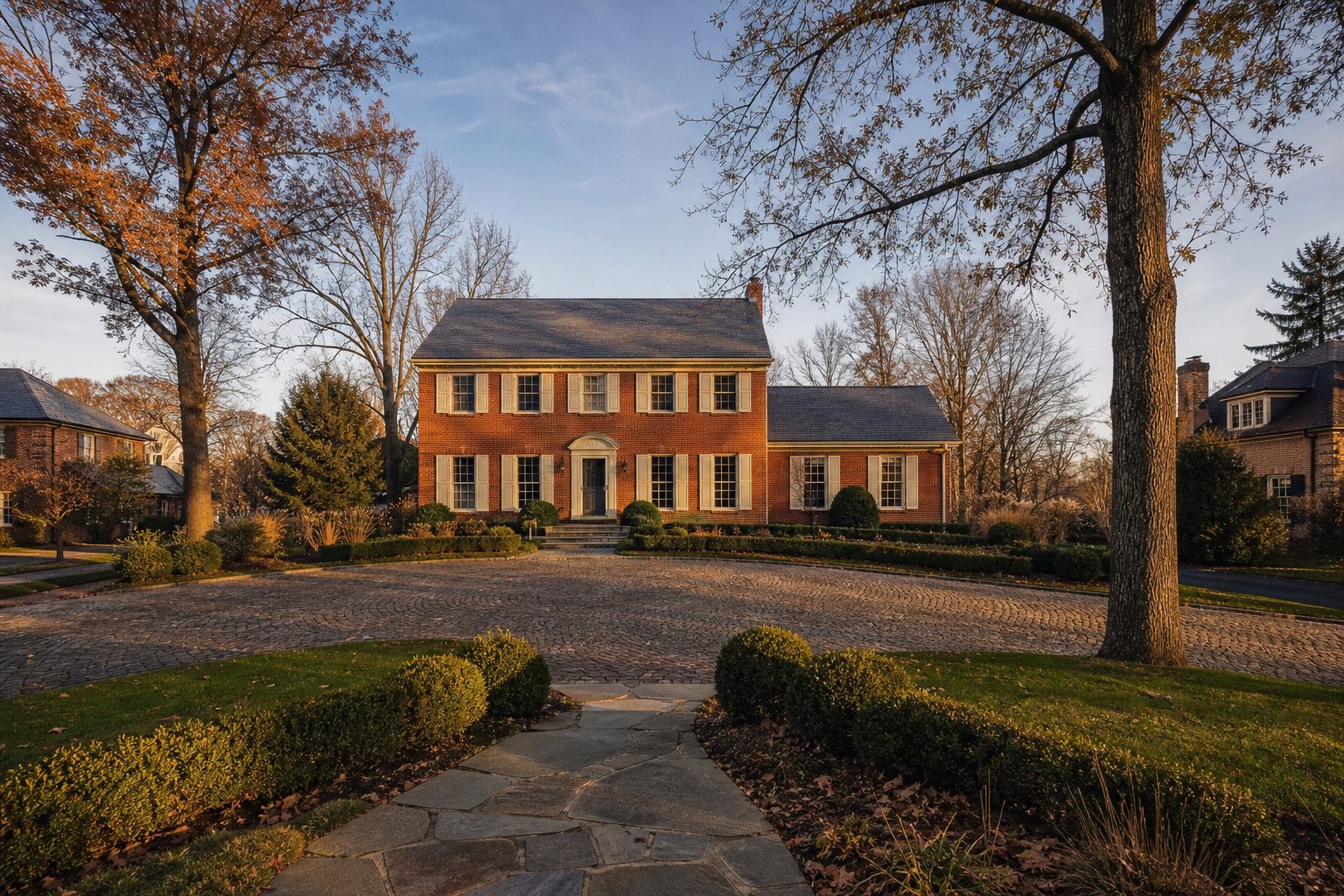
You say five to seven years, but life has other plans. If there is any chance you will stay in that brick colonial on Oxford Drive through two kids’ worth of high school sports, a fixed rate eliminates the “what if” entirely. With rates projected between 6.0% and 6.8% for 2026 (per mortgage rate forecasting), locking in now at least gives you certainty even if it is not cheap certainty.
You Sleep Better With Predictability
Some buyers do the math, see the ARM savings, and still choose fixed. That is completely rational. The psychological weight of an approaching ARM reset date is something spreadsheets cannot capture. With 120 five-star reviews from past clients, I can tell you that the buyers who thrive are the ones who pick the product that matches their temperament, not just their calculator.
Your Equity Position Is Thin
If you’re putting less than 20% down on a $478,000 home, you have a smaller cushion against a market dip. The fixed rate protects you from a double hit: declining equity plus a rising payment. Pittsburgh home prices are expected to rise modestly by 2% to 4% in 2026 (per FRED and WealthyBud projections), but “expected” and “guaranteed” are different words.
The Caps and Worst-Case Payment: What I Always Tell My Clients
This is why I always loop in a lender before anyone commits to an ARM. The caps and the worst-case payment decide whether it fits, not the starting rate. Most ARMs use a cap structure like 2/2/5 or 5/2/5. Here is what those numbers mean for you:
- Initial adjustment cap (the first number): How much your rate can jump at the first reset. A “2” means your 5.9% rate could become 7.9% overnight.
- Periodic cap (the second number): The maximum increase at each subsequent adjustment. Another “2” means it can climb 2% per year after that.
- Lifetime cap (the third number): The absolute ceiling. A “5” means your rate can never exceed 10.9% (your starting rate plus 5%).
What does a worst-case scenario actually look like? On a $382,400 loan, if your 5.9% ARM resets to 7.9%, your monthly payment jumps from approximately $2,266 to approximately $2,784. That is roughly $518 more per month. Can your household absorb that? If yes, the ARM is still viable even in a worst case. If that number makes your stomach drop, the fixed rate is your answer.
Having helped move-up buyers and first-time buyers alike across 12 years in Pittsburgh, the single most valuable thing I do is connect buyers with a lender who will run these scenarios before you ever write an offer. The conversation takes 30 minutes and can save you from years of financial stress.
Frequently Asked Questions
What is the current 30-year fixed mortgage rate in Pittsburgh in 2026?
The national 30-year fixed mortgage rate was 6.43% as of the weekly average on July 2, 2026. Rates in Pittsburgh generally track national averages closely, and you can explore current mortgage rates to see what’s available. Projections suggest rates will hover between 6.0% and 6.8% through the remainder of 2026. Your actual rate depends on credit score, down payment, and lender.
How much can I save with a 7/1 ARM on an Upper St. Clair home?
On a $382,400 loan (based on the Upper St. Clair median of approximately $478,000 with 20% down, per Q1 2026 West Penn MLS data), a 7/1 ARM at roughly 5.9% saves you approximately $127 per month compared to a 30-year fixed at 6.4%. Over seven years, that adds up to approximately $10,668 before any reset occurs.
Is Upper St. Clair a safe neighborhood for ARM buyers?
Upper St. Clair has strong fundamentals that support ARM buyers: 4.7% year-over-year appreciation, a median of just 14 days on market in Q1 2026, and a school district that consistently drives buyer demand (per MLS aggregate data). These factors make it easier to sell or refinance before an ARM resets.
What happens if I cannot sell before my ARM resets?
Your payment will increase based on your ARM’s cap structure. On a typical 2/2/5 cap, your rate could jump up to 2 percentage points at the first reset. I recommend building an emergency fund equal to at least six months of the maximum possible payment before choosing an ARM.
Should I choose a 5/1 ARM or a 7/1 ARM for a five-to-seven-year plan?
If your timeline is five to seven years, I recommend the 7/1 ARM over the 5/1 ARM. The 7/1 gives you a full buffer year or two before any rate adjustment, which protects you if selling takes longer than expected. The monthly savings difference between the two is usually modest.
Can I refinance out of an ARM before it adjusts?
Yes, refinancing is always an option if rates decline. Many forecasters expect rates to gradually ease over the next few years. However, you should never choose an ARM banking entirely on a refinance; treat it as a bonus, not a plan.
How do Upper St. Clair property taxes affect my ARM vs. fixed decision?
The 2026 millage rates include Upper St. Clair Township at 5.230 mills and the Upper St. Clair School District at 27.000 mills, per Allegheny County records. High property taxes mean your total monthly housing cost is already elevated, making the ARM’s lower payment even more appealing for budget relief.
What is the median home price in Upper St. Clair in 2026?
The median sale price in Upper St. Clair is approximately $478,000 as of Q1 2026, up about 4.1% year over year, per West Penn MLS data. Prices range widely from approximately $460,000 to $606,000 depending on the sub-area; Hidden Valley and Country Club enclave homes regularly trade above $700,000.
Are Pittsburgh home prices expected to keep rising?
Home prices across the Pittsburgh metro are expected to rise modestly by 2% to 4% in 2026, according to FRED and WealthyBud projections. Upper St. Clair specifically posted closed sales up 6.4% year over year in Q1 2026, suggesting continued strength in the South Hills sub-market.
Who should I talk to before choosing between an ARM and a fixed rate?
Start with a trusted lender who will run both scenarios using your actual numbers, including caps, worst-case payments, and breakeven timelines. Then bring those numbers to your real estate agent so you can align your mortgage product with your home search strategy and neighborhood selection.
The Bottom Line
Here is my honest take after 12 years and over 850 closed transactions across Pittsburgh. If you’re moving up to Upper St. Clair and you know your timeline is five to seven years, a 7/1 ARM deserves a serious look. The savings are real, the neighborhood’s resale fundamentals are strong, and the school district demand provides a reliable exit. But the starting rate is not the whole story. You need a lender who will walk you through the caps, the worst-case payment, and the total cost over your actual holding period.
That is exactly the kind of planning I do with every move-up buyer I work with at The Mike Pastor Group. If you’re weighing these options for an Upper St. Clair home, or anywhere across the Pittsburgh market, give me a call at 412-214-9494. I’ll connect you with a lender, run the neighborhood data, and help you pick the mortgage that fits your life, not just your spreadsheet.