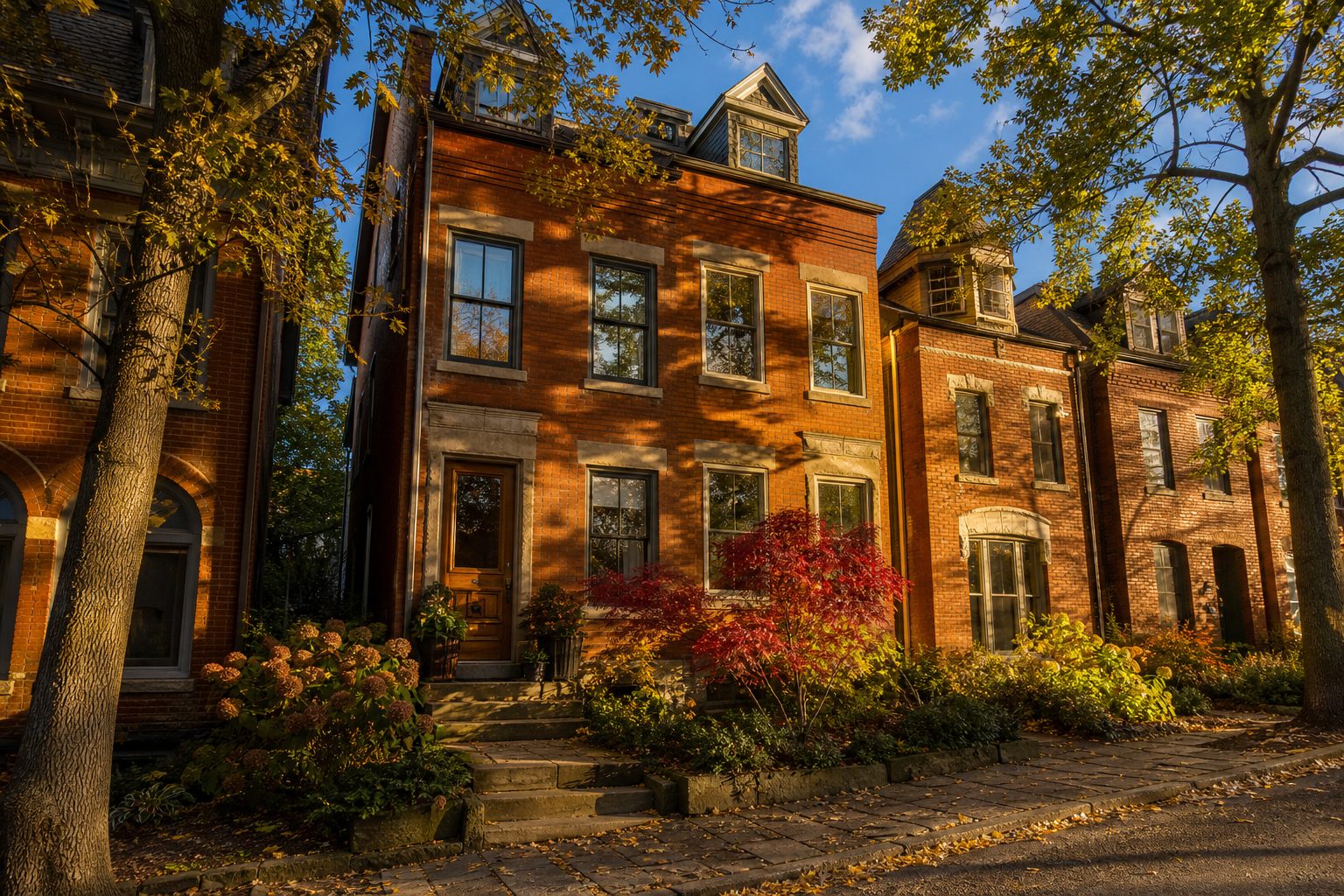
What should out-of-state buyers know before relocating to Pittsburgh, PA, and how do you buy a home in a city you’ve never lived in?
Pittsburgh offers relocating buyers some of the best housing value among major U.S. metros, but the hills, older housing stock, and wildly different neighborhood personalities require local guidance to navigate with confidence.
Why Moving to Pittsburgh Matters Right Now
If you’re working remotely from New York, Boston, or San Francisco and watching half your paycheck disappear into rent, Pittsburgh probably keeps showing up on your radar. There’s a reason for that. Forbes named Pittsburgh one of seven American cities remote workers are choosing in 2026, calling it “one of America’s most underestimated cities.”
Here’s what’s driving the momentum: according to FRED data, the median listing price in the Pittsburgh metro was $257,900 as of July 2026. Compare that to the national median of roughly $425,000, and you start to see why a $120,000 remote salary here buys the kind of lifestyle that would cost $220,000 or more in San Francisco, per cost-of-living comparisons from Expatistan.
I’m Mike Pastor, a Pittsburgh native and leader of the Mike Pastor Group at Realty ONE Group Landmark. Before real estate, I spent 12 years as a network architect designing large-scale systems for Fortune 500 companies. That engineering mindset is exactly what I bring to relocation clients: a clear plan, real data, and technology working on your behalf. Having closed over 850 transactions with 120 five-star reviews, I can tell you that relocating buyers are usually shocked by how much house they get here. They’re also surprised by the hills, the older homes, and how dramatically different each neighborhood feels, even when they’re only a mile apart.
Understanding Pittsburgh’s Neighborhoods Before You Buy a Home
This is the single biggest adjustment for out-of-state buyers. Pittsburgh is not a grid city. It’s 90 distinct neighborhoods draped over river valleys and steep hillsides, and two streets a mile apart can feel like different planets.
Lawrenceville: Pittsburgh’s Creative Engine
If you’re coming from Brooklyn, Portland, or Austin, Lawrenceville will feel immediately familiar. Butler Street runs through the neighborhood’s spine, from Lower Lawrenceville near 38th Street through Central Lawrenceville at 45th Street and up into Upper Lawrenceville near 52nd Street. Expect renovated rowhouses, converted warehouse art studios, and places like Poulet Bleu at 3517 Butler Street and Cafe 8848 at 5242 Butler Street.
The median price range sits at $320K to $520K as of 2026, with +5.5% annual appreciation and homes spending an average of 42 days on market, per West Penn MLS data. What does that actually mean for your budget? You can buy a renovated rowhouse here for $250,000 to $450,000. The entry-level inventory that existed five years ago is largely gone, but Upper Lawrenceville still offers variance on the fringe blocks.
Shadyside: Polished and Walkable
If you want something closer to a Georgetown or Back Bay vibe, Shadyside delivers. Walnut Street is the commercial heart, with Mercurio’s at 5523 Walnut serving pizza and gelato that draws weekend lines, and Pamela’s Diner dishing out legendary hotcakes. The median price range runs $340K to $600K in 2026, with +5.0% appreciation and a 98% sale-to-list ratio, according to West Penn MLS aggregate data. This is consistently the priciest urban neighborhood in Pittsburgh, and it earns it.
Where Families Land in Allegheny County
Families relocating to Pittsburgh with school-age kids tend to look immediately at the suburbs. Mt. Lebanon ($380K to $650K, with homes averaging just 28 days on market and a 99% sale-to-list ratio as of 2026) and McCandless in the North Allegheny School District ($390K to $490K, +4.5% appreciation) are two of the most popular choices, per West Penn MLS data. Cranberry Township is the fastest-growing suburb, with values up 6.7% year over year and medians in the $459,000 to $519,000 range. Still dramatically below what comparable school districts cost in the D.C. or Boston suburbs.
The Pittsburgh “Address Trap” That Catches Every Out-of-State Buyer
So here’s something I tell every relocating client, and it’s one of the most important things in this entire blog. In Pennsylvania, postal addresses, zip codes, municipalities, and school districts rarely match up. A home with a “Pittsburgh” mailing address may not actually be in the City of Pittsburgh.
Why does this matter so much? Buyers in suburban municipalities with Pittsburgh mailing addresses do not pay the city’s 3% wage tax, do not pay the city’s 5% transfer tax, and attend their respective suburban public school systems rather than Pittsburgh Public Schools. This distinction, confirmed by multiple Pennsylvania relocation sources, can save you thousands of dollars annually and completely change your children’s school assignment.
This is where working with a local real estate agent who has logged 12 years in the market becomes critical. I map these boundaries for every client before we even start touring homes.
What Pittsburgh’s Cost of Living Means for Your Remote Salary
Let me put some real numbers to this. According to Salary.com, living in Pittsburgh is less expensive than the national average, with housing costs 11.3% lower. A single person’s housing costs average $1,065 per month, and a family of four averages $1,952 per month.
According to BEA Regional Price Parities data, Pittsburgh’s price level (RPP) is 94.7, meaning $100 has the real purchasing power of about $106 here. Compare that to San Francisco at 115.6, where your $100 buys only $87 worth of goods and services. That’s a meaningful quality-of-life upgrade.
Taxes to Factor Into Your Relocation Budget
- Pennsylvania state income tax: A flat 3.07%, which is below Massachusetts’s 5%
- Pittsburgh city wage tax: 3% for city residents (but remember, many “Pittsburgh address” suburbs don’t pay this)
- Property taxes: Generally higher than Sun Belt states, so budget accordingly
A single person can live comfortably in Pittsburgh on about $55K to $62K per year. A family of four looking to own a home in a solid suburb with strong schools typically needs roughly $110K to $145K. Both figures run about half of what comparable comfort requires in Boston or D.C., according to multiple cost-of-living analyses.
How I Help Relocating Buyers Buy a Pittsburgh Home With Confidence
With 850 closed transactions and a specialty in relocation, here’s the system I’ve developed. I run video tours of homes and neighborhoods so you can narrow your list before you ever board a plane. I map commute times based on where you’ll actually need to go, whether that’s a downtown office, a coworking space, or just the nearest coffee shop with reliable Wi-Fi (Pittsburgh ranked third nationally for internet speed, per CoworkingCafe data cited by the Pennsylvania Association of Realtors). Then I plan a single focused trip so you can tour your top picks, explore neighborhoods in person, and make an offer with confidence.
Your First-Week Checklist After Arriving in Pittsburgh
- Internet: Schedule installation for arrival day. Older Pittsburgh buildings sometimes have wiring that lags behind the advertised plan, and for a remote worker, a slow first week means lost income
- PennDOT: Even though the state gives you 60 days, head to a PennDOT Photo and Exam Center in week one with your current license, Social Security card, birth certificate or passport, and two proofs of PA residency
- Home office setup: Monitors, standing desks, and ergonomic chairs need proper packing. Label everything so you can be functional fast
The Honest Trade-Offs of Moving to Pittsburgh
I wouldn’t be doing my job if I didn’t tell you the full picture. Winters here are long, cold, and overcast. If you’re coming from Austin, Miami, or LA, that’s a genuine lifestyle adjustment. Pennsylvania’s property taxes are generally higher than many Sun Belt states, and you need to budget for heating bills that will surprise you the first winter.
But here’s what I’ve seen over 12 years as a top 1% real estate agent in this market: for professionals who value culture, affordability, walkable neighborhoods, and access to a growing innovation economy anchored by Carnegie Mellon and the University of Pittsburgh, those trade-offs are well worth making. Pittsburgh’s unemployment rate sits at 3.8% as of early 2026, below the national average, with strong demand in software, healthcare, robotics, and financial services.
Frequently Asked Questions About Moving to Pittsburgh
How much does a typical home cost in Pittsburgh compared to coastal cities?
The median listing price in the Pittsburgh metro was $257,900 as of July 2026, per FRED data. That’s roughly 38% below the national median of approximately $425,000. Prices range from the $120K range in neighborhoods like Carrick to $1.5 million and beyond in Fox Chapel, so your budget goes dramatically further here than in most coastal markets.
What are the best Pittsburgh neighborhoods for remote workers?
Lawrenceville and Shadyside offer walkability and great dining. Squirrel Hill appeals to those wanting calm streets with good schools. Cranberry Township and Wexford suit remote workers wanting space. Pittsburgh ranked third nationally for internet speed and offers 7.53 coworking spaces per 100,000 residents, per CoworkingCafe data cited by the Pennsylvania Association of Realtors.
Do I pay Pittsburgh city taxes if my mailing address says Pittsburgh?
Not necessarily. Many suburban municipalities carry a Pittsburgh mailing address but are outside the city limits. Residents of those suburbs do not pay the city’s 3% wage tax or the 5% transfer tax. Always verify the actual municipality before making an offer. This is critical.
What school districts should relocating families consider in Allegheny County?
Mt. Lebanon, North Allegheny (McCandless), and Peters Township are consistently the most sought-after for families. Within the city, Squirrel Hill’s Allderdice feeder pattern leads Pittsburgh Public Schools, per West Penn MLS neighborhood data. Many city families also pursue magnet programs.
How do I buy a home in Pittsburgh if I live out of state?
Work with a local agent who offers virtual tours and can map commute times before your visit. I plan a single focused trip for relocation clients to tour top picks and make an offer with confidence. Pre-approval from a lender familiar with Pennsylvania closing procedures speeds everything up.
Is Pittsburgh a good city for remote work in 2026?
Yes. Forbes named it one of seven cities remote workers are choosing in 2026. CoworkingCafe ranked it the third best city nationally for remote work based on internet speed, entertainment options (677 per 100,000 residents), proximity to four airports within a 70-mile radius, and coworking availability.
How much can I save moving from New York or San Francisco to Pittsburgh?
Cost of living in Pittsburgh is 44% cheaper than New York City, per Expatistan data. BEA data shows Pittsburgh’s regional price parity at 94.7, compared to San Francisco’s 115.6. A $120,000 salary stretches here like $220,000 or more would in San Francisco.
What surprises out-of-state buyers most about Pittsburgh’s housing stock?
The hills and the age of the homes. Many desirable neighborhoods feature early-20th-century rowhouses, brick Colonials, and craftsman homes. Foundations, drainage, and structural quirks in older homes require a knowledgeable inspector and an agent who knows what to flag.
What is Pennsylvania’s income tax rate for new residents?
Pennsylvania has a flat 3.07% state income tax rate. Pittsburgh city residents pay an additional 3% local wage tax. Suburban residents with Pittsburgh mailing addresses typically pay their own, lower municipal tax rate instead of the city’s.
How fast are homes selling in Pittsburgh’s most popular neighborhoods?
In Mt. Lebanon, homes average just 28 days on market with a 99% sale-to-list ratio as of 2026, per West Penn MLS data. Lawrenceville averages 42 days and Shadyside 45 days, both with 98% sale-to-list ratios. Well-priced homes in competitive neighborhoods move quickly.
The Bottom Line on Buying a Home in Pittsburgh From Out of State
Pittsburgh is a legitimate value play for remote workers and transferees leaving higher-cost metros, and the numbers back that up. But the city rewards buyers who do their homework on neighborhoods, tax boundaries, and older housing stock. It punishes those who assume a “Pittsburgh” mailing address means they’re in the City of Pittsburgh.
I’m Mike Pastor, leader of the Mike Pastor Group at Realty ONE Group Landmark, with 12 years of experience, 850 closed transactions, and 120 five-star reviews from clients who trusted me with exactly this kind of move. If you’re considering relocating to Pittsburgh and want a clear plan, real data, and a focused trip that gets you into the right home the first time, call me at 412-214-9494 or visit my team online. Pittsburgh is home, and helping people find their place in it is the best part of the job.